Friday, November 13, 2020

What I Read: October 2020

I gravitated towards some shorter books this month after I finally finished the Alexander Hamilton biography (see below) and the Count of Monte Cristo. I'm not adding photos of the books because I am lazy.

Alexander Hamilton by Ron Chernow ★★★★/5

It's been awhile since I picked up a hefty biography. When I was in highschool, I would frequently have a stack of biographies next to my bed as my 'fun' reading before bed. Majoring in History has righted that weird habit, but I do enjoy a biography here and there.

Like most people, I was led to this biography because I watched Hamilton the musical on Disney+ this summer. I loved the production and I wish there were more historically based musicals out there.

My main problem with this biography is Ron Chernow's obvious biases for Hamilton and against Jefferson. While I find many of his criticisms true and valid, I prefer biographies that contain less obvious bias. If this is the only information you've ever read on the founding fathers, I would recommend reading a few more perspectives in order to gain an accurate view of the events. As always, primary sources, whenever possible, are preferable to someone else's opinions on the subject. Overall, I found Chernow's writing style engaging, and his storytelling well done.

The Bridal Wreath by Sigrid Undset ★★★★★/5 & The Mistress of Husaby by Sigrid Undset ★★★★/5

I've been meaning to read the Kristin Lavransdatter trilogy for many years now, and have just finally gotten around to it. As a wife and mother, I think I appreciate it more than I would have as a young whippersnapper, so it was worth waiting.

My feelings during the first novel, The Bridal Wreath, reminded me a little of how I feel when I read Gone with the Wind. The stories are in no way similar, it's just the feeling of: "NO! STOP GIRL, DON'T! STOP! BAD CHOICE!" I don't want to spoil the story, but essentially, Kristin volunteers for her problems, and she receives realistic consequences in return. I haven't read the third book yet, The Cross, but based on the title, it sounds like Kristin's life will continue to be challenging.

A note: the newer and more popular Penguin translation of this book is rumored to be less accurate to the original language (Norwegian). I went with the older translation (Archer), which the author actually helped with, being fluent in both Norwegian and English. However, it is worth nothing that the Penguin edition may include some text that was excluded from the Archer English translation. I'll have to read that one someday and maybe I can give some better insight.

Where the Light Is by Heidi Pattee ★★★★★/5

Full disclosure, I know the author (friend of my mom's) of this short poetry collection and really like her, so I could be biased, but I loved this book. If you're a lover of poetry, it's definitely worth a perusal. It's quite short and took me less than an hour to read.

The Lion, the Witch and the Wardrobe by C.S. Lewis ★★★★★/5, Prince Caspian by C.S. Lewis ★★★★★/5, The Voyage of the Dawn Treader by C.S. Lewis ★★★★★/5, The Magician's Nephew by C.S. Lewis ★★★★★/5

Ah, Narnia. I re-read these books every few years, and every time, they enchant and teach me. I got through the first 5 in October, and finished up in November. I can't really pick a favorite--they are all so good--but if I had to, I guess I would go with the first. 

I will say that this read through was much more interesting since I recently read Lewis's Space Trilogy, as well as some of his other works. I feel like I understand his worldview so much more after reading many of his books all in a row. His ideas about life outside of our world really fascinate me, especially since he presents it from a Christian perspective.

The Return of the Prodigal Son: A Story of Homecoming by Henri J.M. Nouwen ★★★★★/5

I've had Nouwen on my list for several years, and I'm glad I started with this beautiful reflection. I hope to read more of his work in the future. As someone who also loves art, I was very impressed by how much insight he found in this one Rembrandt painting and am inspired to become a more contemplative person. I think I am so easily distracted as a result of being a part of the 21st century, and the importance of sitting and quietly meditating on beauty was really brought forward by this book.

When God Wrecks Your Romance: Orthodox Faith, Unorthodox Story by Amanda Vernon and Matt Fase ★★★/5

I heard Amanda Vernon on a podcast a year or so ago (can't remember which one), and I was intrigued by her forthcoming book. I loved how boldly she spoke about about a topic which was so personal, and potentially controversial. I've since watched some of her youtube videos, and she has an amazing voice as well as a fun personality. This memoir was a very fun and quick read, but I wouldn't necessarily read it again. If anyone wants to borrow it, my copy is up for grabs!

KPA


Tuesday, October 6, 2020

What I Read: September 2020

September flew by and I only completed four books. To be fair, I started a couple other very long books (Kristen Lavransdatter and Alexander Hamilton by Chernow), so my page count for the month is still quite high. I need to do some catching up in October if I want to meet my goal of 100 by the end of the year!

The Count of Monte Cristo by Alexandre Dumas ★★★★★/5


I've read this marvelous novel at least once before as a teenager, and I loved it even more as an adult. It's roughly 45 hours via audio, and well over 1000 pages in most editions, so this was my main focus of the month. I listened to the Blackstone Audio production, and also read parts in the Penguin edition. The Blackstone uses a different translation than the more recent Penguin edition. This blogger details the various editions and translations, arguing for the Penguin edition as it is the most complete. While that may be true, I do enjoy the Blackstone's more regal, victorian-style English. I would almost certainly include this book in my top ten favorites.

Mara, Daughter of the Nile by Eloise Jarvis McGraw ★★★/5


I rediscovered this beloved book from my teenage years while I was perusing the shelves in my parent's basement (they have an amazing collection of books). I've always been a sucker for historical fiction, and I think it really does help make the history come alive, especially for young students. Re-reading this book, I was less enraptured than I was as a young person, but I still enjoyed it!

A Severe Mercy: A Story of Faith, Tragedy and Triumph by Sheldon Vanauken ★★★★★/5


I started reading this book several years ago, and didn't finish for some reason (late library book, I believe). I decided to revisit it this month, and I'm very happy I did. Vanauken writes beautifully about his extraordinary relationship with his wife, and their journey to God and Christianity through their friendship with C.S. Lewis. His emotions shared in this autobiographical story were very raw and honest, which deeply moved me. I am looking forward to reading his other autobiographical story, 'Into the Mercy,' sometime in the future.

A Grief Observed by C.S.Lewis ★★★★★★/5


Of all of C.S.Lewis's published works, I was least interested in reading this short book. The reason I ended up reading it this month is simply because Sheldon Vanauken references the title in 'A Severe Mercy'. I think I've avoided this book because I didn't know C.S.Lewis's story, and just assumed that this was a book about powering through grief, because all will be well. That was absolutely not what it was. C.S.Lewis, I discovered, was married late in life to Joy Davidman, acquiring two step-sons in the process. His marriage was cut short by the death of his wife, which drove him to the edge of despair. This book, which is essentially a series of Lewis's journal entries, was initially published under a pseudonym, which I found really interesting. This is by far the most intimate and emotional piece of writing that I've read by Lewis, and he clearly struggled to share it.

That's all she wrote. Now, on to my last 25 books to complete the year!

KPA

Wednesday, September 2, 2020

What I Read: August 2020

With the excessive heat and sunshine of August, I spent less time reading and writing and more time at the pool! I completed seven books, and am in progress with a couple others. I know that I will miss the ease of summer when the winter snows arrive, but I am definitely looking forward to the cool days of Nebraska autumn.

August put me at 70 books read so far this year--30 more to reach my goal! Without further ado, my August booklist:

The Mayor of Casterbridge by Thomas Hardy ★★★★/5

56759

I love the untamed drama of Thomas Hardy's novels. If you think everything has gone wrong for a character, think again. It always gets worse. Almost without fail, Hardy's characters 'get what's coming to them' everytime; no action is without consequence. The Mayor of Casterbridge in particular highlighted how envy and greed can entirely twist and form a person's character. I would still rate Tess of the D'Urbervilles and Far From the Madding Crowd as my favorite Hardy novels, but this one was also quite intriguing.

What Alice Forgot by Liane Moriarty ★★★/5

6469165

I made the mistake of reading four Moriarty novels in a row, so the lines are blurring a bit, but I think this is my favorite. Spoiler alert--you find out within the first few pages that Alice, the title character, is suffering from accident-induced amnesia and has 'lost' 10 years of her memory. In essence, she feels like the person she was 10 years prior, which turns out to be radically different than her current self. I found myself considering for days after, what would my life look like if this happened to me? It was quite thought provoking!

Big Little Lies by Liane Moriarty ★★★★★/5

33516773. sy475

I enjoyed this Moriarty novel also. My major complaint with her books overall is they are all lengthy without a cause. This book, like the others, could have been edited down significantly. That aside, I enjoyed the plot of this novel, and the characters felt like they could be real people. I particularly enjoyed the way she wrote from different perspectives throughout the novel. I am looking forward to watching the show at some point, although a friend has warned me of its inconsistencies with the book.

Truly Madly Guilty by Liane Moriarty ★★/5

26247008

Truly Madly Guilty dragged on and on. I found it to be fairly anti-climactic, kind of like this review, but at least this is short.

Pride and Prejudice by Jane Austen ★★★★★/5


1885

I just finished Pride and Prejudice for my upcoming bookclub meeting and it grows more delightful with every perusal. I laugh, I cry, and I sometimes get so angry with Lydia that I throw my book. Jane Austen has an uncanny ability to portray people just as they are. She doesn't hyperbolize their faults or their admirable qualities; all of her characters feel like they could be real people, even 200 years later. This novel is definitely in my top ten favorite books of all time (ooo I need to do a post on this topic). Well worth a read (or a reread...or a re-reread).

Mating in Captivity: Reconciling the Erotic and the Domestic by Esther Perel ★★/5

27485. sx318

Woof. A friend recommended this to me, and while a very small portion of this book brought about interesting thoughts and conversations (ie you are a person independent of your partner even after marriage and it's good to remember that), I would say that overall it was very sad. The utter selfishness that is the drive of the sexual relationships given as examples in this book is the actual problem, not domesticity or eroticism. I found myself feeling upset for all of these couples who were using each other for pleasure, got bored, and then wondered why they weren't happy. In short, the vibe was "hooray sexual revolution and sex without consequences (lol false dichotomy); we no longer know how to be basic humans in a relationship because we are so selfish, but hooray sexual revolution for making everything awesome." There were so many issues with the logic (or lack thereof) that I'm not going to take the time to elaborate on. In short, I do not recommend. You'd be much better off reading Love and Responsibility or Theology of the Body.

Under the Greenwood Tree by Thomas Hardy ★★★/5

825901

I could hardly believe this was a Thomas Hardy novel. Unlike all of his other books I've read (Tess, FFMC, Jude the Obscure, Mayor of Casterbridge) this novel was sweet and whimsical. I won't read it again, but the gentle romance and hilarious church choir made it well worth my time.


Wednesday, August 5, 2020

What I Read: July 2020

July has been the busiest month of this year for me! I am surprised that I still finished 8 books, and got started on a few others. As of this week, I'm up to 65 books read this year! I still have a ways to go to meet my goal of 100, but well on my way. I might need to cheat a bit and start reading some shorter/easier books because my brain is getting tired.

As a reminder, you can see the 'how and why' for my book rating system here.

Death Comes for the Archbishop by Willa Cather ★★★★★/5

545951


I read a couple of Willa Cather novels in high school, and made the mistake of thinking her books were 'boring.' The truth is that I was boring, and ignorant. Last year, I reluctantly picked up O Pioneers! for bookclub, and was stunned by how much I loved it. Shocking that an incredibly talented, award-winning author could be good, right? *facepalm* Well, Death Comes for the Archbishop completely blew O Pioneers! out of the water, in my opinion. I read a short commentary written by Willa Cather after Death Comes for the Archbishop became a rousing success, and I was further surprised to discover Willa Cather was not a Catholic, but wrote so beautifully and accurately about the church. The last few pages of the book in particular blew me away. I'll be thinking about this book for a long time, and I'm sure I will reread it in the future.


Northanger Abbey by Jane Austen ★★★/5

50398

According to my Goodreads account, it's been about 12 years since I last read this book. I previously gave it 5 stars, and I have no idea why. It is most certainly my least favorite Austen, and I doubt I will read it again. It's worth reading once at least, especially in the context of its being Austen's first novel. We had some interesting discussions pertaining to its origins and background in which Sam shared information from the annotated version. It is posited that Austen was mocking the Romance and Gothic novels that were popular at the time. Reading Northanger Abbey with this in mind provided some necessary context for her humor. I need to read more in the Gothic genre to really appreciate what she was getting at, but I don't know if I want to. 
My Alma Mater, Hillsdale College, recently put out a free online class on 'Northanger Abbey: The Young Jane Austen' which I am planning on watching at some point.

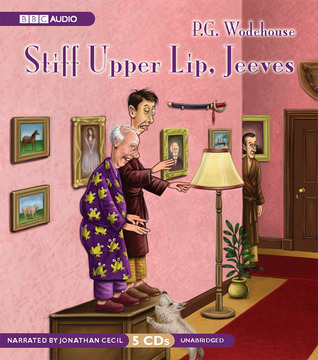
Stiff Upper Lip, Jeeves by P.G. Wodehouse ★★★★★/5

1077303

I think this is my very favorite Jeeves and Wooster. I've read it about five times and I laugh aloud multiple times, every time. Any of the adventures which include Madeline Bassett, Gussie Finknottle, Pop Bassett and Roderick Spode win out over any other group of characters. I highly recommend listening to the audio version, narrated by Jonathan Cecil (available on Libby). He is such a master narrator, especially when it comes to Wodehouse novels.

Neverwhere by Neil Gaiman ★★★★★/5

38886181. sy475

Ah. Another delightful Gaiman novel. I don't know if 'delightful' is the right word. His stories tend to be sort of dark, but in the best way. Without blowing the premise, Neverwhere imagines an invisible London alongside the actual London. The invisible London, or 'London Below' is so fascinating. In some ways, this story reminded me of something out of Harry Potter. 
Side note: I would recommend reading the 'author's preferred text'; apparently, Gaiman has published two, maybe three versions as well as a TV show.

American Gods by Neil Gaiman

I can't give this a rating, because I didn't finish it. GASP. I rarely start a book without finishing, but this was an exception. It's not that it was terrible, but it was very graphic. I get where Neil Gaiman was coming from and what he was trying to do, but I just wasn't up for it. If you've spent anytime reading Greek/Roman/Norse mythology, you'll know that these gods are very...racy. NG's American gods are worse. If you decide to read this book, don't say I didn't warn you.

The Shining Company by Rosemary Sutcliff ★★★/5

272527

I haven't read a Rosemary Sutcliff novel since I was a teenager, but this came up as a recommendation on my Libby app, so I gave it a go. I really loved the Eagle of the Ninth series in early highschool, but I had no idea how prolific Sutcliff was outside this series. She wrote dozens of historical fiction books, and although they are mostly labeled as youth fiction, I found her writing to still be appealing as an adult. Her historical knowledge is mind-blowing, and the way she brings characters and situations to life is very impressive. All of this aside, I discovered from my google search that Rosemary Sutcliff was severely disabled by Stills Disease as a small child. This information blew me away. Someone who could not even walk was able to write over 50 books in her 72 years, fiction and non-fiction. Not only that, but most of her novels must have required intense research as they are historical/folk-based fiction. Her autobiography, Blue Remembered Hills has been added to my list as a necessary read!

The Screwtape Letters by C.S. Lewis ★★★★/5

11149

To be honest, I have been putting off reading this book for many years out of dread. I didn't want to deal with the 'creepy' aspects of the subject material. In reality, it wasn't all that creepy, but rather was a catalyst for self-reflection. I will definitely revisit this one in the future, but it's not a favorite.

Nine Perfect Strangers by Liane Moriarty ★★★/5

39280445

Nine Perfect Strangers is my first Moriarty novel! I've been meaning to pick up one of her books for months, but was always put off by the length. I'm not afraid of long novels in general, but the trend of the modern lengthy novel turns me off. I've found that most modern novels over 250 pages could have been seriously condensed and still retained and possibly improved the story. This novel was no exception. I liked the idea of the story, and don't regret reading it, but it was much too long. I just finished a second Moriarty novel (I'll include it next month!) and found the same problem. This is not so much the author's fault as it is the modern editor's. Overall, I would recommend this book. Moriarty has a great, conversational writing style that keeps you going.

After the Funeral by Agatha Christie ★★/5

527744

A friend warned me that as Christie's books went on, she seemed to write more and more negatively. I've found this to be true. The men in these later books all seem to be evil losers, and I seem to discover the killer in the first couple chapters. I'm trying to power through the rest of the Poirot books (I think I have 10ish left?) but I don't know if I can make it at this point.

***********************************

In addition to the books listed above, I started reading Pride & Prejudice again for Jane Austen Bookclub. We have been meeting some evenings to read sections aloud, and the experience is delightful. I find myself laughing aloud frequently while reading this novel. It is exquisite.

KPA


Thursday, July 30, 2020

Sources of Inspiration Writing Exercise (Chapter 3)

Back in April or May, we were on chapter 3 of the Neil Gaiman Masterclass, which focused on 'Sources of Inspiration' for writing. Neil talked about using stories you know well, like fairytales, and looking at them from another perspective. One of the writing exercises gave creative prompts along these lines---I chose this one: "Have your [fairy tale character] explain their actions to a jury."  Here is what I came up with:


A Slippery Case

“My Lord and members of the jury, may we now present case number twenty-two, accused by the Crown of eavesdropping and attempted burglary.”


The weary magistrate hardly acknowledged the approach of his last case of the day, waving a tired hand, gesturing for all to be seated as he finished his hasty scribbles summarizing the previous case. One after another they had rolled in today, and all he wanted was to send this next perpetrator on to trial so he could go home where his pipe, bathtub and hot cup of tea waited for him before a roaring fire. He adjusted his twisted magistrate’s wig of voluptuous curls, and croaked tiredly, “yes yes, continue bailiff. The crown requires you to read the prisoner’s intake information for the men of the jury. ” He leaned back, with his eyes slightly closed. He could almost taste his pipe.


There was lengthy pause.

“Bailiff, please continue.”

“Yes, my Lord. Uh…well…under ‘name’ the prisoner has written ‘Beeswax, Nun O’Yours.’

“Pardon ME? What is the meaning of this?” The magistrate sat up straight and glared across the court room. It was then that he saw the prisoner. The justice hadn’t bothered to even look at the accused when he entered the room—they all looked the same to him after a day’s full of petty thefts and jay-walkers--but this man was certainly different. The first question was whether he could actually be called a man at all. No, the magistrate decided, this was a boy, but an odd boy indeed. His face looked so young, but his eyes were so ancient. The prisoner sat in the dock with his arms bent behind his head,

“Young man, you will remove your hat immediately, wipe that impertinent grin from your face and sit up straight! You are making yourself ridiculous.”

The boy sat up slowly and removed his hat, but his smile only widened as if to say, “don’t you see how ridiculous YOU are, my Lord?”

The magistrate glared indignantly at the boy as he straightened his wig. Without moving his glance from the boy, he instructed the Bailiff to continue.

“Uh, place o’ residence is described as uh…’not here.’”

“Is it, now?” Said the justice under his breath, and he scribbled furiously. “Bailiff, you may cease your introduction, I will address the prisoner myself.”

“Young man, what is your name if you please?”

“Peter, your eminence. Peter Pan.”

Hmph. Finally, they were getting somewhere, the magistrate considered to himself. Sometimes intimidation was the only way with these young criminals. “Young man, how many years are you?” He continued in his sternest voice.

“375 your highest-ness” replied the boy with his grin widening.

“Stop being ridiculous young man; how many birthdays have you had?”

“OH!” The boy chuckled, “I don’t know the answer to that I’m afraid. We have birthday parties all the time. Maybe a few thousand then?”

The boy looked strangely earnest as if we was slightly appreciative that the magistrate was actually interested in birthday parties. The magistrate was not interested. He scribbled furiously.

“Young man, I am tired of your tom-foolery.”

“It’s Peter your Gracefulness, not Tom.”

“MASTER PAN.” The justice breathed deeply; he lowered his voice. “This is not the kind of behavior which I allow in my court. Now can we continue without any more of this nonsense?”

“Sir yes sir, no nonsense sir.” Pan replied, somewhat earnestly.

“Hmph” replied the tired magistrate. The last case of the day was not going to get his blood pressure up. He just needed to wrap this up, calmly and quickly. He took a deep breath. The magistrate lifted the paper which the bailiff had presented to him and scanned through the various details.

“Master Pan, is it true that late last night, you were found sneaking into a third story window of the corner house located at 235 Regent street, and were caught in the act of attempted robbery?”

“Well your superlativeness, I would say ‘sneaking’ is not EXACTLY what I was doing, but it was more like skulking, or maybe slinking—”

“I WAS NOT-” The magistrate paused for a deep breath “…finished, young man.” Pan smiled an irritating smile.

“Sorry your wonderfulness.”

The magistrate ignored this sarcasm and continued, “and is it not true, young man, that you have several, if not many times, spied on the family residing at 235 Regent Street and even gone so far as to torture the family dog?” The magistrate looked up. The boy was smiling brightly, which he found to be extremely irritating. “Well? What have you got to say for yourself? Be brief. These men,” he gestured to the grand jury, “will either acquit you based on your testimony and my judgement, or they will accuse you and your case will be sent to trial. Do you understand?” Pan nodded. “Proceed.” The magistrate began to write again.

“Well, your holiness’” Pan wriggled uncomfortably in his chair, “it wasn’t exactly as you say. I didn’t sneak in any window. Sneaking is very low, and I like to think of myself as a bit of a gentleman. I don’t go places where I’m not invited. Well, I haven’t lately anyways, not since last week.” He wriggled uncomfortably. “And anyways, the window was open, and I flew in, which is much more genteel than the commonplace sneaking.”

“You flew in? What do you mean by that?” The magistrate said, drolly. What an odd duck this boy was.

“It’s how I get around usually. You know. Like a bird.”

“Well damn, if this boy isn’t just an idiot,” the magistrate thought to himself. He felt a little more sympathetic now. Maybe all this strange child needed was a few years at the mental hospital. “Yes, my boy,” he said with forced sympathy, “of course you flew in, but why were you there?”

“For the stories sir. You see, Wendy tells stories about me every evening and I like to listen outside the window and well, last night, after the stories were over and I had flown off, I realized I’d accidentally left my shadow behind. Well, I hadn’t so much left it as I had it torn off of me by the idiot nursemaid. See, that’s the dog your Benevolence. She is really the stupidest dog, quite as dumb as a brick. She wouldn’t know a shadow if she saw one. Anyways, so, all I was doing, you see is flying about outside, listening at the window and trying to rescue my shadow, which IS my OWN property.” He stopped for a breath and looked up expectantly at the judge, as if he thought he might commiserate. The magistrate just glared from behind his spectacles. Peter continued.

“Anyhow, Wendy, that’s the girl, I saw that she had stuffed my poor shadow inside of her sewing box, and so I just sort of slipped in quietly after the blokes were all in bed to take back what was rightfully mine. I didn’t mean to disturb anyone, but you’ve got to admit they had it coming. Locking one’s shadow in a box is bound to come back and bite you. She had no right to do that you know.” He was becoming visibly frustrated. “Well everyone knows that girls can be a bit thick at times. Anyway, I wasn’t going to press charges or anything, so I just broke open the lock and liberated my Shadow, and we would have just left quietly, but he simple insisted on starting a fight with me. See, he’s never been on his own before, and I think he quite liked the idea of night on the town…which is ridiculous, obviously.”

Peter looked up expectantly for empathy, but all the expressions of the room were a mixture of confusion and pity.

“Young man,” the judge interrupted, “I think we’ve heard enough.” He gave a knowing look to the jury, all of whom shook their heads incredulously. “I believe we can let this go, Bailiff, please escort this young man out.” Peter smiled, and marched gaily out behind the Bailiff.


The judge heaved a great sigh moments later as he disrobed in the small, adjoining quarters. This generation was turning out so weak in the head, he considered. Well, he couldn’t let that stop him from a relaxing evening in front of his fire.


As he alighted from his carriage after a brief ride home, he noticed a light on, shining through his open bedroom window. “Ah,” he thought to himself cheerfully. “O’Grady’s anticipated my arrival.” He imagined his bath already drawn and his nightly cheese tray laid by as he climbed the stairs.

“O’Grady?” There was no response from his valet as he walked in. He entered his bedroom and was rather surprised to see that although there was a fire roaring and water in the bath, his usually serious valet was sitting with mouth agape, in his favorite easy chair. He absently held a small package, wrapped with brown paper and string. At his feet lay the remnants of charcuterie scattered carelessly on the floor. Bits of cracker and cheese smushed into the carpet.

The valet, at seeing his employer, jumped to his feet. “Pardon sir,” he said hastily handing the package to the magistrate. “This parcel just…arrived sir.” He dropped to his knees and began to gather up the scattered food. The valet did not look up, but began to speak as he cleaned, “Sir, I apologize for the short notice, but I need to take a short holiday. I believe I’m unwell.”

“Well, O’Grady, I’m sorry to hear that.” The magistrate responded without sympathy, eyeing the wasted cheeses. “I hope it’s not serious.”

“I’m sure its nothing sir, but I’m just overtired. I imagined that as I was bringing in this tray, a boy was standing in the window where I found the parcel, and then I thought he crowed like a rooster and flew away.”

The magistrate started. “Ah, well yes, very good then O’Grady, that will be all. Forget the tray this evening. I’ll raid the cupboard”

As O’Grady left the room with the discarded tray, the magistrate turned toward the fire. He slowly unwrapped the strange parcel, and inside found a bar of soap. It looked like it had been used. He wrinkled his nose in disgust. A short note was enclosed. It read as follows:


Your heftiness, in case you should ever lose your shadow and need to reattach, I found this to be sort of helpful. PP

Monday, July 6, 2020

Note Bene & How to Read a Book


567610
When I was a freshman in high school, my brother (Sam) and I had bi-weekly classes on reading and philosophy, taught by a local doctoral candidate. Our teacher has since gone on from his doctorate to get married and start an online school I believe. I took a couple philosophy courses a few years later in college, and none of those professors, as good as they were, taught me as much as this high school tutor.

It was a long time ago, so I know my remembrance of his class is a bit hazy, but I do know that we started with Mortimer Adler's How to Read a Book:The Classic Guide to Intelligent Reading.  I really, really need to read this book again, because I know I have forgotten so much, but his basic ideas resonate in my memory. Before we studied this book, I never previewed any book before reading it. 

Glancing through the table of contents? Why would I do that? 
Read the forward? Pshaw! 
Introductions? For old people! 
Glossaries? Boring! 

Clearly, I didn't know what I was missing. 

Another thing that I remember Adler said (or at least what my teacher made us do) was to always read with a pencil in hand. I still do this if I own the book (which I often don't). It drives some people nuts to mark up their books, to which I say, you probably don't want to borrow books from me. Many of my books have been well notated, wrestled with and loved. I don't know how I would have made it through college without the intense graffiti which plagued all of my texts. It really and truly increases my comprehension and understanding of difficult texts, and I notice how much more I retain when I do this.

Anyhow, I digress. The whole point of this post was not Mortimer Adler, but rather something I learned from my high school philosophy tutor, which I have done consistently ever since, which is: Note Bene*.  I don't know where he came up with this particular idea, although N.B. is a common note, which basically means 'this is worth taking notice of' or more literally, 'good note.' My teacher encouraged us to create some kind of notebook or journal in which to put 'nota bene' or 'good notes' from our reading. Whether it was philosophy, poetry, fiction, non-fiction, etc, didn't matter. Any time we read something that struck us and we wanted to remember it, he encouraged us to write it down in our 'Note Bene' book. I didn't end up having a physical book for a long time, but I would copy quotes and phrases into a Word document on my computer. I've been slowly copying some of my favorite quotes from that document into a physical, leatherbound notebook over the past year, and I continually add to it. Perusing through my 'Note Bene' is one of my favorite things to do, as weird as it sounds. It's like a garden of all the most beautiful things I've read in my life, all gathered into one place. I will share some of my favorites from time to time.

An old favorite is this beautiful quote from C.S.Lewis's, Till We Have Faces. My brain is foggy on the particulars of this scene, but I believe Psyche is explaining to her sister, Orual, why she does not fear her death, but looks forward to it:

"The sweetest thing in all my life has been the longing--to reach the Mountain, to find the place where all the beauty came from--my country, the place where I ought to have been born. Do you think it all meant nothing, all the longing? The longing for home? For indeed it now feels not like going, but like going back."

The whole conversation is worth copying into any Note Bene. Really, all of Lewis's writings I could devour again and again, and probably shall.

KPA
********************************************************************************

*I am no Latin Scholar, so it may be more properly 'nota bene,' but I'm unsure. What I remember it being, and what I say is 'note bene'


Tuesday, June 23, 2020

100 Million Words Writing Contest

This past week, our writing group paused our Masterclass exercises to participate in Freewrite's 100 Million Words Writing Contest. Sam made the suggestion as it was free to enter, and the prompt was simple: write 2000 words or less about the topic 'Silver Linings.'  We all chose to write fictional stories, and I love how differently we all approached the topic. If you are so inclined, head over to the contest and vote for the members of our writing group: samtheamericaneagle, krpynes, and squittio.topo!

My short story is included below. I haven't come up with a title, so if you have a suggestion, please comment!

********************

One thing was certain, Jane had not thought claustrophobia would be her first feeling waking up in the afterlife, but here she was, gasping for air that she couldn’t take in. As she pressed desperately against the silver lining of her coffin, she found that she couldn’t brace herself. Her pale arms burst through silver lining and metal casing, plunging into the cold earth as if nothing had been there at all. She jerked her arms back to her chest in horror and closed her eyes tight. How the hell was she supposed to get out of here?
“Just stand up, it’s easier than you think” said a voice. She opened her eyes to see the misty body of an older woman floating above hers. She would have screamed if, in her terror, she remembered how, but instead she started flailing her misty limbs, trying to find stability in her new world sans gravity.
“Ah” the ghost sighed sympathetically. “That’s the ticket! Just get your body moving. You’ll figure it out soon enough. Pop on up when you’re feeling better.” She floated up through the earth and out of sight.
Jane took a deep breath (well, she tried to). It was no use delaying the inevitable, and whatever was up there would almost certainly be less terrifying than laying in her coffin for all eternity. 
She tucked her legs under her body and plunged upward through the satin lining of her coffin, like she did as a child pushing off the bottom of her parent’s swimming pool.
As she left the darkness of the ground for the darkness of the night sky, she felt the summer breeze brush her cheeks and the moonlight warmed her face with its familiar glow. Jane glanced at her surroundings—she vaguely recognized the old graveyard in which her grandparents were buried, but something seemed different.
A great oak tree towered several yards in front of her, and beyond the oak tree was the little church. Had she been married there? Or was she thinking of someone else? Her life felt like a dream long forgotten.
Under the branches of the great oak tree on an ancient bench sat the old woman, the one who had visited her coffin. In the moonlight, she looked much less menacing and maybe not quite as old as Jane had originally guessed. She was clothed in a silvery white light, which lay gently on her limbs, and her shining hair cascaded over her shoulders. Jane advanced toward the tree cautiously, unsure what to say to her dead companion after her less than ideal first impression.
The woman rose gracefully as Jane approached with her arms outstretched in welcome. “Please forgive me—I’m so sorry if I frightened you, dear Jane. I couldn’t wait any longer to see you!” Jane was quite taken aback. “I’m sorry, what do you mean?” She looked intently into her companion’s eyes. She did seem familiar in some way. And did she look a lot younger? In fact, Jane wondered why she had ever thought she was an old woman at all. Age must be a relative thing when dead: the body has lived through every age, and every age now rippled through the woman’s face like water gently stirred upon a still pond.
“I was waiting for you to wake up. You’ve been sleeping for a long time.” The woman smiled as she pointed to the grave from which Jane had risen.

Jane Gray
12/20/1989—12/01/2020

“Oh gosh,” Jane replied, glancing around a the graveyard strewn with summer. “It’s gotta be June or something?”
“Something like that,” her companion replied.
“But it was winter? I can’t remember…but wasn’t it almost Christmas? And it was snowing. And I was hanging up a stocking for the baby—”
Jane’s speech halted. Her head spun, and if she could have been sick, she would have been. 
“The baby” she gasped. “Where’s the baby?”
She began to run down to the path; she had to reach the gate. She had forgotten that as one of the dead, she no longer needed the paths of the living to travel, and she had quite forgotten that her body was just mist. All she remembered was the warm blood pooling around her former body as she had lain on the ground under the fallen ladder, her unborn child still inside her womb.

At the gate, the silvery ghost stood guard. “I’m sorry Jane,” she whispered firmly, “but you cannot leave.”

“Let me out!”  Jane screamed and clawed at the silvery woman to no avail. She could not push past the woman or the gate, as if an invisible wall stood between her and the world outside. She tried pushing herself into the air again, but the invisible wall extended up and up. There was no escape. Jane turned back, her eyes glowing as she directed her rage towards the woman guarding the gate. She never remembered feeling this angry in the land of the living, but emotion was stronger when not checked by societal norms, and that emotion brimmed over. She screamed the primal yell of a grieving mother, torn from her young, and Jane’s voice became a living thing, a howling wind which tore through the cemetery. Gravel from the path flew across the grounds like bullets, and the great oak tree swayed violently towards the ground.

“I’d stop that if I was you.” The ghost woman said calmly. “They won’t like it. They’ll probably put you back in the ground again, and you won’t like that. You made quite a fuss last time.”

Jane came face to face with the ghost, her eyes blazing. “What do you mean last time?” Her voice shook with anger and desperation.

“I mean the last time you woke up. We didn’t get far before They—“ she paused, looking up, “they came and put you back. We aren’t meant to stay here long and They don’t like us disturbing the living, especially right next to the chapel.” She nodded respectfully towards the little church where Jane now clearly remembered being married last spring. The wedding was much smaller than she had always dreamed it would be, but it had been the loveliest day, with all of the flowers in bloom and trees shrouded in leaves. “Oh…I…I don’t remember.” Jane mumbled, almost apologetically, collapsing to the ground and leaning against the invisible wall. It was nice somehow to feel something was solid, even if it was her prison gate.

Her companion sat quietly next to her, curling her knees up to her chin, where she rested her head and examined Jane intently. “They wouldn’t let me wake you up again for the longest time. They said you had to wait, and so I’ve waited also, but I would really like us to go home now.”

“Who are you?” Jane asked.

“A friend,” the woman replied quietly. She looked very young as she said this. “I’ve come to help you out of here, if you will come with me.”

“Of course I’ll come with you if you can get me out of here,” Jane replied incredulously. “I have to see if my baby is alright. Can you get me back to my house?” She longed for her little brick house on the quiet tree-lined street, freshly painted white before the winter had set in.

“No, I can’t.” Replied the woman, her glance turning to the ground. “But I can take you home.”

“That doesn’t make any sense. My house is my home. What about my husband? What about my baby? I need to find them and make sure they are okay. I can’t go anywhere until I know they are okay.”

The ghost sighed quietly. She looked like a frustrated mother explaining to her toddler for the hundredth time why she couldn’t fly to the moon in her cardboard spaceship.

“Jane, you can’t go to your house. It’s not there anymore. It hasn’t been there for a long time.”

“What do you mean? It can’t be more than six months since…since I got here. It said December and it has to be June…or July at the latest.”

“You did die in December.” Jane winced as her companion spoke. “But it was many Decembers ago. Jane…you’ve been here for years.”

…

Jane hugged her knees to her chest and stared blankly at the ground. How many years had she been sleeping while her husband mourned and her child…had her child lived? Had she grown up without a mother, all because of some stupid accident?

“It’s okay.” The woman said gently. “Everything will be alright, Jane, you just have to come with me this time. Please.”

“But my baby…where is she?”

“She’s here, Jane.” The ghost replied, gazing across the churchyard.

“She didn’t make it? I killed her…I killed her.” Jane sobbed uncontrollably now, but no tears could flow from her misty eyes.

“No, Jane, she lived. She lived a long life in the little brick house, and she missed you and loved you and hated you…but she forgave you. And she’s here now and you can go home and be with her, but you have to let go. There’s nothing for you here anyways.”

Jane thought of her home and her life in the little brick house, of her dreams of being the perfect mother and growing old with her husband. She mourned for the Christmas she had missed with her new child and all the Christmases afterwards. A vision of her daughter’s life played before her hazily: her first birthday and her last; her wedding day and the birth of her first grandchild. All the days which Jane had missed flashed through her mind like a flood, and the overwhelming sorrow became the rain that fell gently into the graveyard.

“They say it’s time for us to go” said the voice next to her, and Jane saw that her companion was now quite, quite young. “Are you ready, Mother?”

And as the rain stopped, Jane and the child she held to her chest disappeared into the light of the sunrise.